
What Affects the Cost of Commercial Heating in Kingston upon Thames?
What affects the cost of commercial heating?
The cost of commercial heating in Kingston upon Thames depends on the building, the heating demand and the work required. A small office in a converted terrace will have different requirements from a restaurant, hotel or larger commercial premises.
Whether you are a property owner, builder, property manager or business operator, understanding the main cost factors makes it easier to compare quotations and plan the work properly. A reliable assessment should look at the complete heating system, not just the boiler or the headline equipment cost.
1. The size and layout of the building
The size of the premises is an obvious factor, but floor area is only part of the calculation. Ceiling height, room layout, insulation, glazing and the number of occupants all affect how much heat the building needs.
A property with several separate rooms may require different heating zones and controls. Open-plan spaces may need a different approach, particularly where doors are frequently opened or where heat needs to be distributed evenly throughout the building.
Older commercial properties around Kingston upon Thames, Surbiton and New Malden can also present additional challenges. Thick walls, draughts, outdated pipework and limited plant room space may affect the design and installation process.
2. The existing heating system
Replacing an existing boiler is not always a straightforward swap. The condition and layout of the current system can influence the work involved, including:
- Existing boiler capacity and efficiency
- Pipework size, condition and accessibility
- Radiators, fan convectors or other heat emitters
- Flue position and possible routes
- Pumps, valves, expansion equipment and controls
- Available gas and electrical supplies
- Space for the new boiler or plant equipment
If the existing system is poorly balanced or has developed recurring faults, replacing one component may not resolve the underlying issue. Thorough fault finding can help identify whether the problem is isolated or connected to wider system performance.
3. Heating demand and business use
Commercial heating requirements are closely linked to how the premises operate. A café, pub or restaurant may need heating that responds to changing occupancy throughout the day. A hotel, office or other business may need separate control over different areas and operating hours.
Commercial catering can also place additional demands on gas and heating systems. Kitchens often have high heat output, extended operating periods and strict operational requirements. The heating design must work alongside the wider commercial gas and electrical systems rather than being considered in isolation.
4. Boiler type, capacity and manufacturer
The choice of boiler affects both the installation and the ongoing operation of the system. Capacity must match the building's heating demand. An oversized boiler may cycle inefficiently, while an undersized system may struggle during colder weather or busy periods.
Equipment selection can also be affected by available space, flue arrangements, hot water requirements and the way the premises are used. Commercial heating projects may involve more than one boiler or additional controls, depending on the scale and layout of the building.
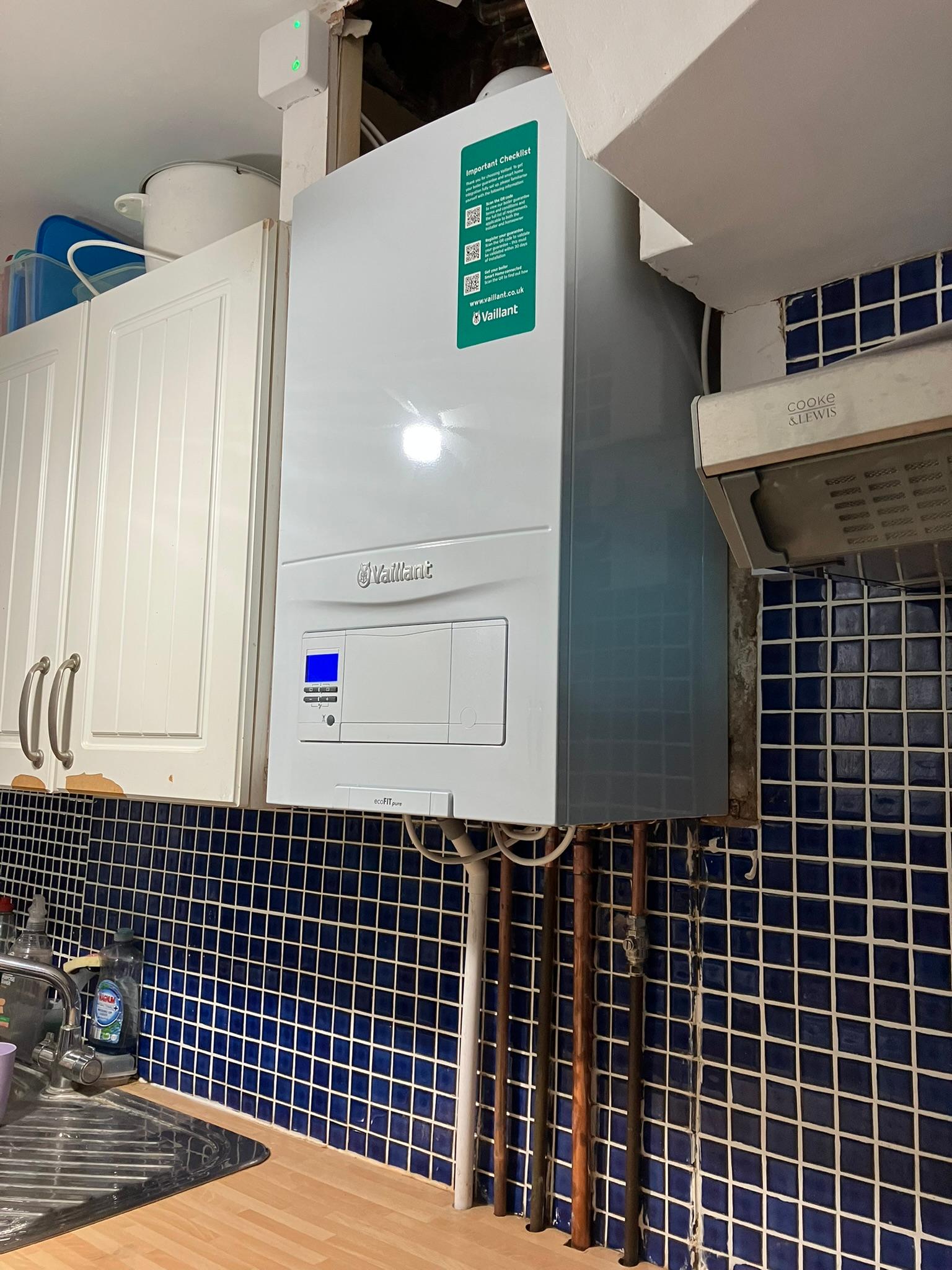
When a replacement is suitable, Smart Environment Services fits Worcester Bosch, Vaillant, Ideal, Baxi, Glow-worm, Viessmann and Intergas boilers. The right option depends on the property and system requirements, rather than simply choosing the most familiar brand.
5. Heating controls and zoning
Heating controls can have a significant effect on both installation scope and day-to-day energy use. Basic time and temperature control may be suitable for a small property, while larger or more complex premises may benefit from separate zones, programmable controls and smart heating automation.
Zoning allows different areas to be heated according to their use. For example, an office, reception area, storage room and staff space may not all require the same temperature or operating schedule.
Controls also need to be commissioned properly. A system that has suitable equipment but incorrect settings may not deliver the expected comfort or efficiency.
6. Access, disruption and installation conditions
Access can affect the time and labour required for commercial heating work. Tight plant rooms, restricted delivery routes, upper-floor equipment and busy premises can all make installation more involved.
Businesses also need to consider disruption. A restaurant, office or shop may need the work planned around opening hours, staff access or other building operations. Builders and property managers should provide details about access, existing services and site constraints when requesting a quotation.
7. Compliance, inspection and future maintenance
Commercial heating work may involve gas safety inspections, electrical checks, controls testing and documentation. Gas work should be carried out by a Gas Safe registered engineer, with the relevant checks completed before the system is put into normal use.
Maintenance requirements should also be considered at the planning stage. Regular boiler servicing and timely repairs can help identify issues before they lead to disruption. An Electrical Installation Condition Report may be relevant where electrical systems or controls are being altered, depending on the scope of the work.
How to obtain an accurate commercial heating quotation
Provide as much information as possible about the property, current system, heating problems and intended use. Useful details include the building type, approximate size, number of floors, current boiler, available access and any plans for refurbishment or change of use.
A proper site assessment is usually more useful than a remote estimate because it allows the engineer to inspect the existing installation and identify practical constraints. The final cost may depend on equipment selection, materials, access, pipework alterations, controls and the amount of preparatory work required.
Commercial heating in Kingston upon Thames
Smart Environment Services provides commercial heating, boiler installation and replacement, boiler servicing and boiler repair for businesses and property professionals across Kingston upon Thames, Surbiton, Tolworth, Chessington, New Malden, Esher, Thames Ditton, East Molesey and surrounding areas.
For applicable work, a 12-month workmanship guarantee is provided. This covers defects arising directly from workmanship. Manufacturer warranties apply separately and vary by product and manufacturer, while component failures, misuse, accidental damage and alterations by others are excluded from the workmanship guarantee.
If you are planning a commercial heating installation, replacement or repair, contact Smart Environment Services to discuss the building, the existing system and the right next step.